
Fundamentals
What Is Demand Forecasting? A Guide for E-Commerce Brands
Demand forecasting predicts how much of each product you'll sell over a given period — and it's the foundation of every good inventory decision.
Stockorlo connects to your e-commerce stack and generates SKU-level demand forecasts — so your inventory team always knows what to order, how much, and when.
Running out of your best SKUs at the worst moment — holidays, promotions, launches — because your reorder timing was based on gut feeling, not data.
Buying too much of the wrong SKUs — products that sit in your 3PL for months, draining capital you could deploy elsewhere.
Your ops team spends time in spreadsheets calculating reorders instead of improving supplier relationships or growing the business.
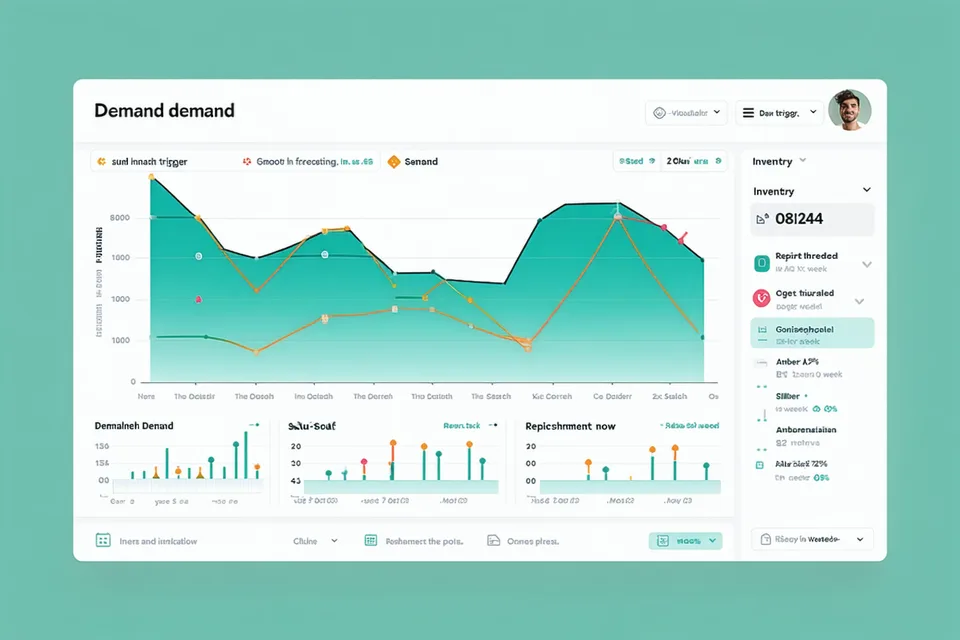
From demand signal to purchase order — Stockorlo handles the full forecasting and replenishment workflow.
Stockorlo ingests your sales history, seasonality signals, and channel data to generate a forward-looking demand curve for every active SKU in your catalog — not category-level averages, but line-item precision.
Forecast horizon: 4, 8, or 12 weeks. Updated daily as new sales come in.
When a SKU's projected inventory level crosses its reorder threshold, Stockorlo surfaces a replenishment recommendation — with suggested order quantity calculated from your lead times and sales velocity.
Approve recommendations in bulk, or push orders directly to NetSuite, QuickBooks, or your 3PL.
Understand your inventory health at a glance. Track sell-through rates, inventory turnover, days of supply, and reorder accuracy across your full catalog.
Weekly digest sent to your ops team. Data exportable to your BI tools.
No data team required. Stockorlo is built for operations managers, not engineers.
OAuth-based connectors to Shopify, Amazon, WooCommerce, BigCommerce, NetSuite, and more. Setup in minutes — no SQL, no API keys, no developer.
We ingest your order history, returns, seasonality patterns, and channel-level velocity to build a demand model at the SKU and location level — updated every 24 hours.
When inventory approaches your reorder threshold, Stockorlo surfaces a recommended purchase order — quantity calculated from lead times and forward demand. Approve or push directly to your OMS.
Stockorlo speaks the same language as the platforms mid-market brands already run on.
Shopify, WooCommerce, BigCommerce — pull order history, inventory levels, and product catalog automatically.
Native connectorAmazon Seller Central, Walmart Marketplace — unify marketplace demand signals with your DTC channel.
Native connectorNetSuite, QuickBooks, Cin7 — push approved replenishment orders directly without re-keying data.
Two-way syncTransparent SKU-based pricing. No seat fees. No surprise overages.
Up to 500 active SKUs
Up to 5,000 active SKUs
10,000+ SKUs, custom SLAs
Practical guides for operations managers at growing brands.
Demand forecasting predicts how much of each product you'll sell over a given period — and it's the foundation of every good inventory decision.

Stockouts lose sales. But the reflex response — padding safety stock across the board — ties up cash you don't have.

Inventory turnover ratio measures how efficiently you sell and replace stock. Here's how to find the right balance.